.png)
Queen Palms, Fusarium Wilt & What Spring Growth Is Telling Us
- greenlandenvironmental
- Mar 21
- 2 min read
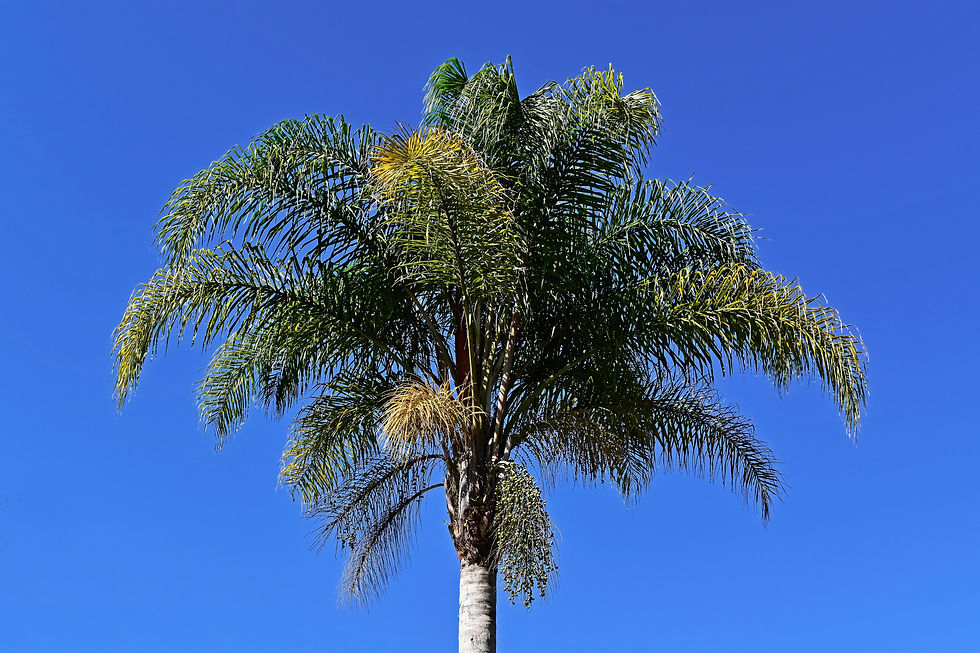
As spring settles in across the Treasure Coast, queen palms are beginning to push new growth. Warmer temperatures and longer days naturally wake them up. But this time of year also has a way of revealing problems that have been quietly developing for months. If you’re noticing uneven browning, one-sided decline, or fronds that just don’t look right on your queen palm, spring growth may simply be exposing something that was already there.
One of the most serious concerns we monitor in queen palms is Fusarium wilt, a fungal disease that affects the vascular system of the palm. Because it moves internally through the water-conducting tissue, symptoms often don’t appear immediately after infection. The palm may look fine for a period of time. Then, as it begins pushing new growth in spring and demand for water increases, the damage becomes more visible. You might see one side of a frond turning brown while the other side remains green, or entire older fronds declining prematurely. That uneven pattern is often the first clue that something deeper is happening.
At the same time, it’s important to approach this season calmly. Not every brown spot is a crisis. Queen palms naturally shed older fronds. Cold stress from winter, nutritional imbalances, pruning practices, and irrigation issues can all cause temporary discoloration. A single browned frond does not automatically mean Fusarium wilt. However, stress has a compounding effect. When a palm experiences cold stress, inconsistent watering, or nutrient deficiencies, its overall resilience declines. If disease is present, those stress factors can accelerate visible decline. Spring growth doesn’t cause the problem — it simply puts pressure on a system that may already be compromised.
This is why observation matters so much right now. Healthy new spear growth is a positive sign. Consistent color across fronds is reassuring. But one-sided dieback, progressive browning that moves upward, or repeated uneven decline deserves attention. The earlier a palm is evaluated, the clearer the diagnosis tends to be. Waiting until multiple fronds collapse can limit management options.
The bigger takeaway for this time of year is perspective. Spring is not just a growth season; it’s a revealing season. It shows us how well plants came through winter and whether any hidden stressors are present. Queen palms, in particular, can look strong until they’re under growth pressure — and that’s when underlying issues surface.
If your queen palms are showing unusual browning or uneven decline, it’s worth having them looked at before summer stress compounds the situation. We can help evaluate and identify whether what you’re seeing is normal seasonal shedding, environmental stress, nutritional imbalance, or something more serious like Fusarium wilt. Not every brown frond signals disaster — but understanding the difference early can protect the long-term health of your landscape. Spring growth is speaking. The key is listening before stress has a chance to stack up.


Comments